Oliver Bearman didn’t just come out of the Japan GP with a hard hit and a bruised weekend. He came out with a point to make, a technical gripe with the regulamento de 2026 logic, and a warning about how diferença de velocidade is rewriting the rules of wheel-to-wheel life. In his own words, the move by Franco Colapinto was “inaceitável” and the context matters: this wasn’t a random tap, it was a high-stakes timing mismatch at Suzuka.
Following this incident, the debate has gone beyond the crash frame and into the bigger question: can drivers truly “defend your position” when the cars are arriving with bigger pace gaps than before? According to our editorial desk, the way this moment is being dissected shows just how quickly the sport’s new era can turn dangerous, especially if drivers don’t calibrate their spacing. Jogo Hoje.
What Bearman said about Colapinto
Bearman’s core accusation was simple but loaded: Colapinto moved across to defend, and the timing was wrong because the speed differential made even “small” steering inputs blow up into major risk. Speaking on the Up To Speed podcast, he pinned the issue on how the cars now behave under the regulamento de 2026 ecosystem.
Bearman referenced the numbers like a race engineer talking to a driver. He said it was a difference of 50 km/h, and that this is exactly the kind of scenario where “defending” stops being a gentleman’s game and becomes a geometry problem. He argued that last year, the same exchange would likely have stayed within the margin, because the gap would have been only around 5 to 10 km/h. With the bigger pace difference, Colapinto allegedly didn’t give him enough room to avoid contact once the situation turned.
And then there’s the human layer, the one that stings. Bearman said drivers talked beforehand about respecting each other more, yet the incident looked like a breach of that agreement. If the paddock is trading notes on how to coexist, why does the track still punish the ones who misread the moment?
How the Suzuka crash unfolded
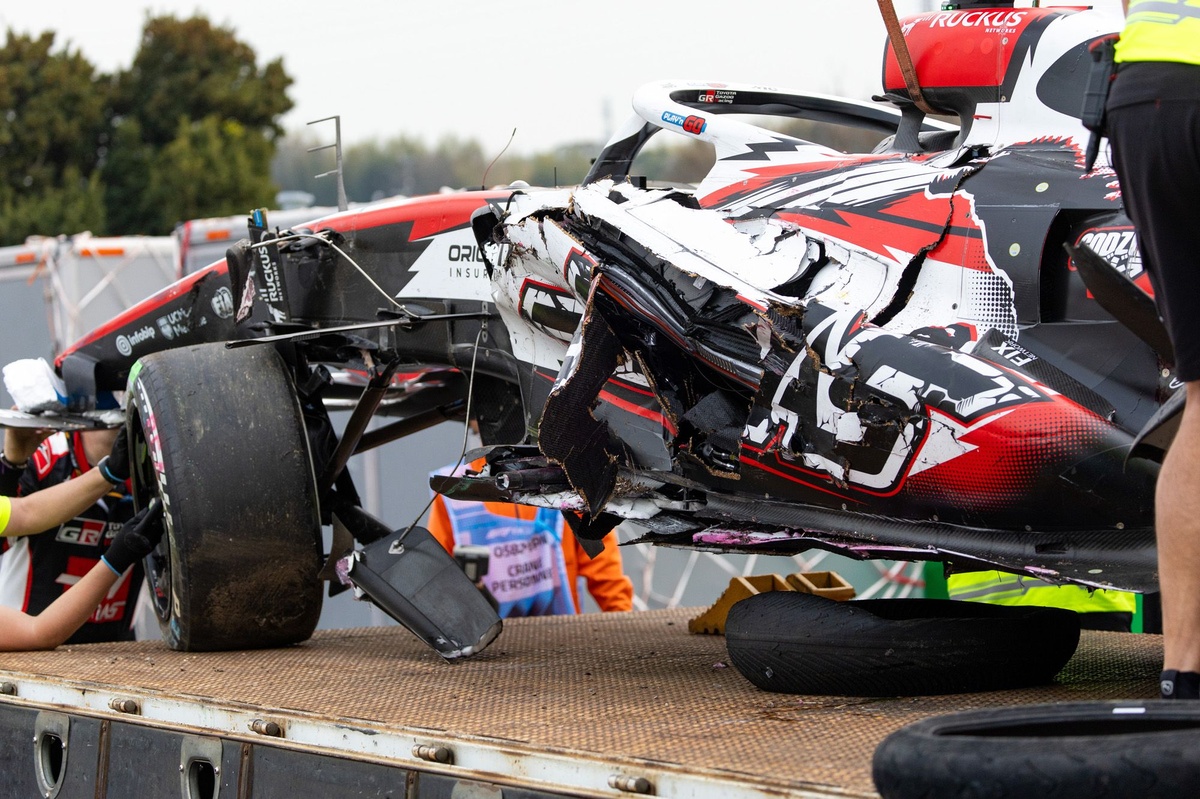
At Suzuka, Bearman tried to avoid Colapinto after the Argentine allegedly cut across in front of him during the defense. The consequence was violent enough to register an impact of 50G into the barriers. Bearman framed it as a situation where, once the move happened with that pace gap, the window to react became razor-thin.
Technically, he described it as a “small” lateral shift that becomes enormous when the relative velocity changes. That’s the big point: when the diferença de velocidade grows, every micro-movement becomes magnified in time and space. It’s not just about intent; it’s about how much distance you have before your options disappear.
Bearman also insisted that Colapinto had him in view and could have avoided the collision. He claimed that last year, the timing might have been “acceptable,” but this year it was too late to execute the same defense safely. To Bearman, the mirrors were checked, the move happened, and the physics did the rest.
Why the difference in speed became the real problem
Let’s get tactical for a moment. In modern F1, “defending your position” is supposed to be about predictable lines and fair warning. But when the difference in speed between cars jumps, the closing time changes, and with it the reaction budget. Bearman basically said: with a ~50 km/h gap, you don’t get a second chance. The late-look defense doesn’t just reduce safety margins, it wipes them out.
This is where the new era becomes a headache for everyone. If overtaking is already hard because the airflow and grip windows are tight, what happens when the speed delta is bigger? You end up with fewer frames of decision. That’s why Bearman’s talk about “not knowing the limits” resonates: he argued that under previous regulations, drivers were near a mature understanding of how close you could run without turning a fight into a crash.
Now, under the regulamento de 2026 framework, the learning curve is shorter in calendar time but longer in consequences. When the cars are more different in pace, the same defending behavior can flip from acceptable to dangerous in a heartbeat.
What the incident reveals about the 2026 regulations
Bearman didn’t just complain about one rival. He tied the episode to the wider picture of F1’s 2026 regulations and the safety implications that come with them. The key link is the “velocity gap” effect: larger differentials mean fewer opportunities to avoid incidents once a driver commits to a move late.
He also referenced something the FIA has been emphasizing: the cars are incredibly safe, and the FIA work shows in how he survived a heavy hit. But safety of the chassis doesn’t negate the responsibility on-track. If the hardware protects bodies, the on-track conduct still decides whether you need that protection at all.
Bearman’s frustration, then, is a two-part message for the sport. First, the new rules may be engineering performance and racing in a way that increases risk in close duels. Second, drivers have to adapt their timing and their definitions of “enough space,” because the old playbook may no longer fit the new speed math.
A view on safety and pilot responsibility
We’ve seen safety evolve through car design, halo-like thinking, and barrier improvement. But the sport’s next safety frontier is behavioral. Bearman’s insistence that drivers should “defend earlier” isn’t a moral lecture; it’s a practical demand for better spacing. In a world where the diferença de velocidade can swing decision-making into milliseconds, early commitment is the only way to keep the fight fair.
So here’s the uncomfortable question: if drivers agreed in advance to respect each other more, why did this still happen? Maybe because the track punishes optimism. Maybe because the new pace regime makes it harder to judge the exact moment when a defensive move stops being “defend your position” and starts being a gamble.
And if the sport doesn’t refine the unwritten etiquette fast, we’ll keep seeing these debates flare up after high-energy hits. The impact of 50G is a number you remember, but the real cost is the trust that wheel-to-wheel racing is supposed to build.
O Veredito Jogo Hoje
Bearman is right to connect this to the new regulamento de 2026 reality, because speed gaps don’t just change lap times—they change risk geometry. But we’ll go further: the bigger the difference in speed, the less room there is for late “defend your position” theatrics. If the drivers want the sport to stay safe, they need to defend with the kind of early, predictable timing that matches the new physics. A crash measured in 50G isn’t a learning tool; it’s a warning label.
Perguntas Frequentes
What did Bearman say about Colapinto?
Bearman claimed Colapinto defended by moving across in front of him when the timing was too late, arguing that with the current regulamento de 2026 pace gap, Colapinto didn’t leave enough room to avoid contact.
Why did the Japan GP crash reignite the debate about F1 2026?
Because Bearman tied the incident to the larger difference in speed between cars under the 2026 rules, suggesting that bigger closing rates reduce reaction time and increase the risk of unsafe outcomes in close duels.
How many G were recorded in Bearman’s accident?
Bearman’s crash involved an impact of 50G.